How Casino Scenes Shape Ideas About Risk and Safety
Use this film-club plan for discussing casino scenes to spot how framing, sound and character choices shape ideas about risk and safety without mistaking story for evidence.
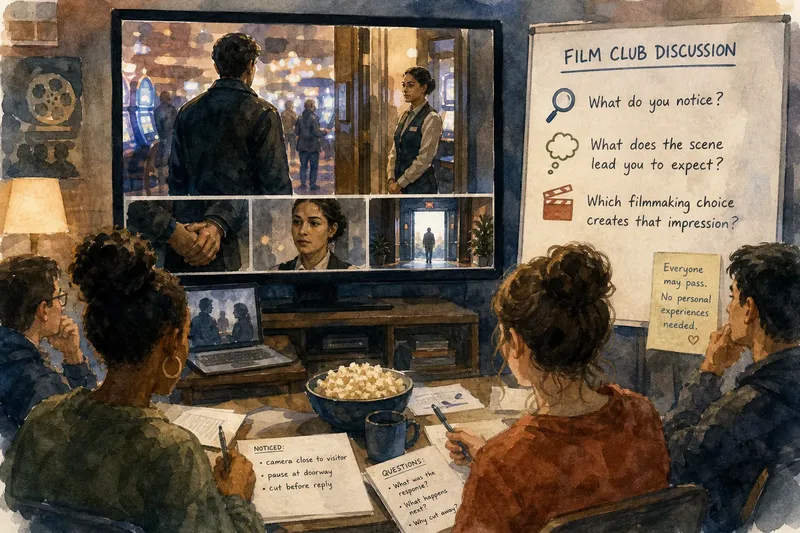
A character reaches a doorway just as the soundtrack swells and the camera cuts to a watchful face. A film-club discussion of casino scenes can trace how editing, sound and point of view steer an audience’s attention, while keeping the conversation about storytelling rather than claims about real venues.
Follow the filmmaker’s choices, not a verdict about the setting
A uniform in the background might suggest authority; a tight shot of a visitor’s hands might make the same moment feel tense. Neither detail carries a fixed meaning on its own. The camera’s position, the soundtrack and the character whose perspective leads the scene work together to shape the effect.
Ask what the film invites viewers to notice or expect. A precise answer names the cue—such as a lingering close-up or a sudden cut—and describes its effect without treating it as evidence about how a real casino works.
Set up a screening that gives everyone room to join
Choose a short scene with a clear exchange or decision, such as a character asking for help or deciding whether to leave. Use a laptop or television, check that the dialogue is audible, and switch on captions if they make the scene easier to follow.
Before playing it, say that anyone may pass and nobody needs to share personal experiences. Put three prompts on paper or a whiteboard: “What do you notice?”, “What does the scene lead you to expect?” and “Which filmmaking choice creates that impression?”
Separate visible details from interpretation
Start with what appears and sounds on screen: camera movement, dialogue, pauses, lighting, music and edits. “The camera stays close to the visitor” describes a visible choice; “the visitor is unsafe” interprets its meaning. Ask what supports that interpretation and what other readings might fit.
Notice what the scene leaves out, too. A cut before a reply or a camera that excludes another character can limit what the audience knows. Those omissions are storytelling choices worth discussing, not proof of what happened outside the frame.
Use a simple turn-taking pattern
Pause at a moment of choice and invite each participant to name one detail before anyone offers an interpretation. In a larger group, pairs can compare notes and share one observation and one question.
Try a three-part turn: name the character’s action, describe the response the film shows, then identify an alternative the story does not include. Passing should remain an easy option throughout.
Read prevention cues as part of the story
For a prevention-focused conversation, examine how a scene portrays choice, assistance and movement. Can viewers tell whom the character approaches? Does the edit show a response, or cut away? Does the framing make leaving part of the character’s options? These questions analyse how the film constructs a moment, not how a real venue is run.
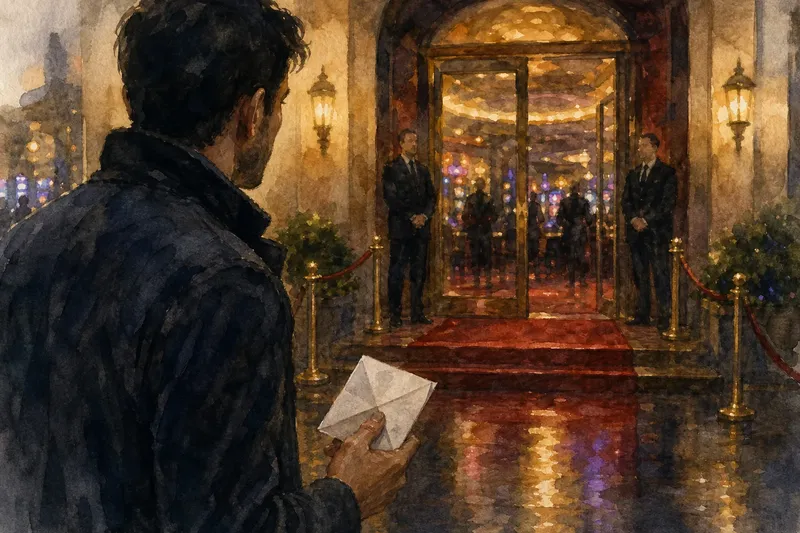
Say the group is watching an invented scene in which a visitor pauses beside a gaming area, approaches a staff member near a doorway and receives no visible reply before the film cuts away. Participants first note the three actions in order, then each writes one question about the missing response. If the group agrees that the cut leaves the exchange unresolved, its conclusion is about the scene’s ambiguity; if someone reads the pause differently, the group can point to the exact shot or line behind that interpretation.
- Observe whether the shot shows an entrance or exit. If the route is visible, discuss how the framing guides the viewer’s eye; if it is hidden, name the cut or angle that obscures it and consider what a wider shot would change.
- Observe whether the film identifies the person a character approaches. If dialogue or framing makes their role clear, identify the cue; if not, note the uncertainty and consider what line or visual detail could clarify it.
- Observe how the other character responds to a concern. If the reply is shown, describe its words and delivery; if the film cuts away, mark the response as unknown and discuss how that omission affects the scene.
- Observe whether the character moves towards an exit or remains in place. If movement is shown, compare the camera’s treatment of it with the earlier shots; if it is not, avoid assuming why and ask what the film leaves unresolved.
- Observe where music or editing changes around an ordinary action. If a cue heightens tension, name the sound or cut and compare it with the action; if no change is apparent, focus on dialogue, lighting or camera position instead.
- Observe whose point of view the camera follows. If it shifts between characters, compare what each can see; if it stays with one person, identify whose perspective dominates and which reactions remain outside the frame.
Which questions help keep the discussion grounded?
How can a film make a casino scene feel calm?
A steady camera, measured dialogue or a clearly shown exchange may create that impression. Ask which specific choices contribute to it, and remember that the impression belongs to the scene’s presentation.
How can a scene make risk feel exciting?
Fast edits, emphatic music or a close-up can lend a decision energy. Name the technique, then ask whether the film also shows hesitation or uncertainty.
What should a host do if someone shares something personal?
Listen without pressing for details and remind the group that passing is allowed. Offer a pause and, if appropriate, return to the film’s craft rather than asking the person to explain further.
When should the group replay a moment?
Replay it when a line, sound or action was hard to follow. Give everyone one cue to watch for, then ask what the replay clarifies and what remains open to interpretation.
Close with one observation and one open question
For a short session, compare what the camera shows with what the soundtrack suggests, then discuss the choice facing the character. If the group watches two scenes from the same film, compare how each handles point of view or a request for assistance.
Invite each person to name one filmmaking choice that shaped their impression and one question the scene leaves unanswered. A careful film-club discussion of casino scenes can sharpen attention to how stories frame risk and safety; the useful habit is to keep that reading tied to the choices on screen.