How Casino Entrances Shape Arrival and Movement
Casino entrance design can make arrival easier to understand. See how routes, sightlines and sensory cues shape movement from pavement to lobby.
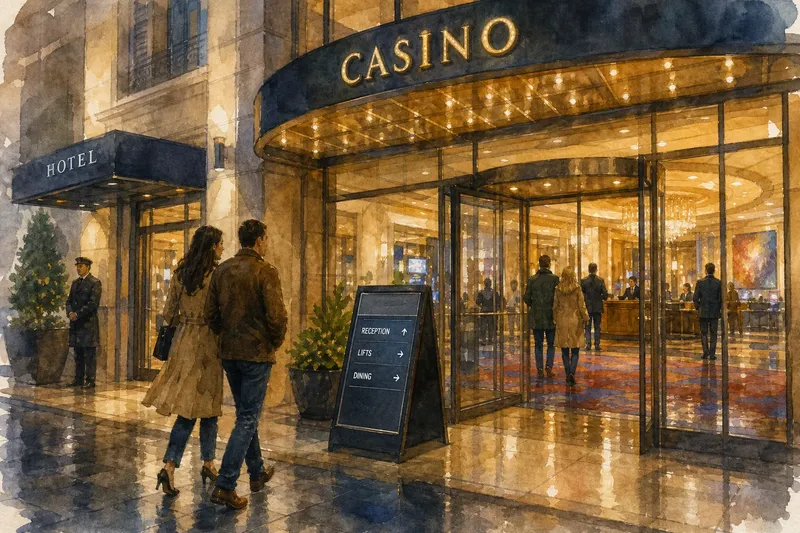
A visitor arrives at a casino and finds the doors tucked beside a hotel entrance, while a bright lobby glows beyond the glass. Casino entrance design starts shaping the visit before anyone reaches reception: the approach, sightlines and first sounds all hint at where to go next.
Rather than treating the threshold as a welcome or a barrier, look at how it organises movement. The useful questions concern sequence: what catches the eye, where people pause, and how the space directs them towards the next part of the building.
The approach sets the pace of arrival
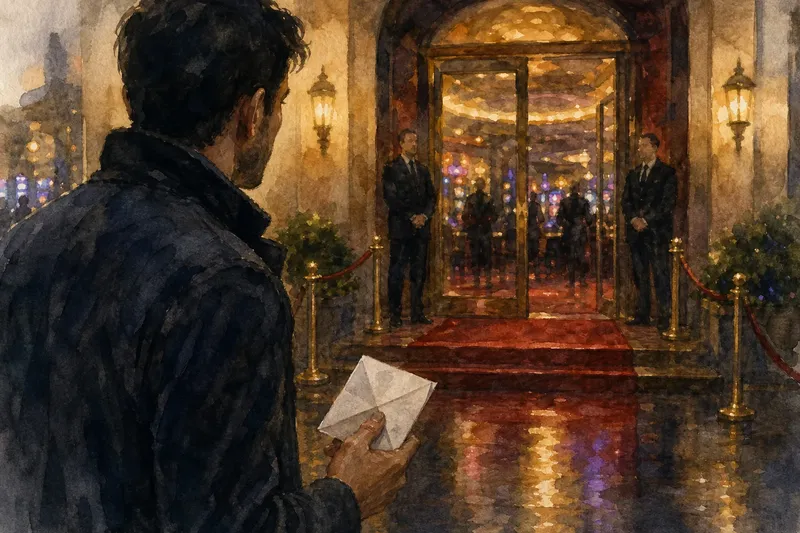
From pavement to lobby, an entrance can compress several transitions into a short walk. A canopy, a set-back doorway or a vestibule creates a different rhythm from doors opening directly onto a busy street.
Watch how the route handles arrivals and departures at the same time. A door that opens into a clear lobby gives people room to orient themselves; a doorway opening straight onto a narrow passage may make stopping feel awkward.
Groups also change the scene. A family meeting at the entrance, a taxi passenger stepping aside to check a phone and a visitor carrying a bag all need somewhere to pause without turning the doorway into a bottleneck.
Sightlines reveal what the building prioritises
Stand at the point where the doors open and notice what is visible without searching: a reception desk, a lift bank, a staircase or perhaps a display that draws the eye elsewhere. This is not a verdict on the venue; it is a description of the choices the layout makes prominent.
Compare the view from different positions. A desk might be obvious to someone entering alone but hidden from a person approaching with a group. Reflections, bright screens and decorative partitions can also change what stands out.
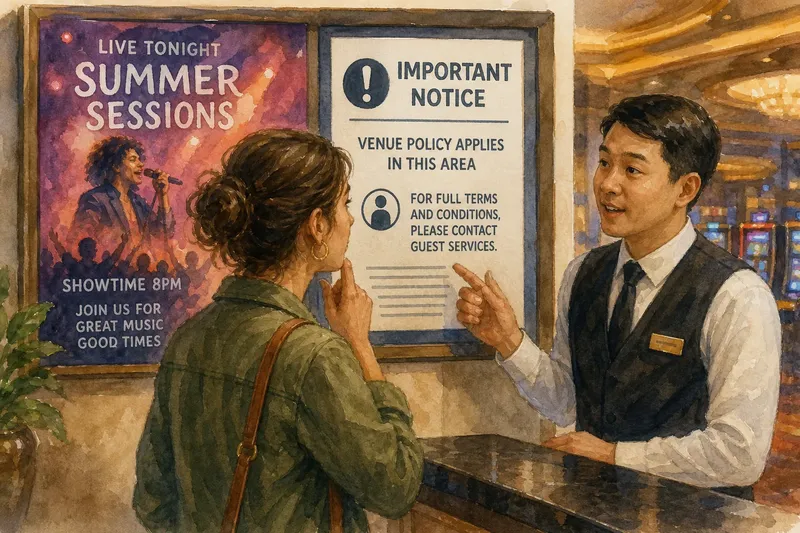
Direction is not the same as access information. A sign pointing to a lounge tells visitors where it is, while posted entry conditions or a staff member can explain who may enter and what applies.
Sound and lighting shape the threshold
The shift from street noise to lobby sound can happen all at once or in stages. Music audible through the doors, conversation near a desk and the hum of ventilation each contribute to the character of the arrival space.
Lighting can do similar work. A bright sign may make a destination easy to spot, while glare on glass can obscure a directory. Note what is visible from the approach, rather than assuming that a lighting choice has a particular purpose.
These observations describe the space, not how a visitor will feel in it. Someone’s response to sound, brightness or crowding will depend on the person and the moment.
Entrances tell only part of the story
A threshold can show how people are channelled into a building, but it cannot explain every rule, service or activity beyond the lobby. Security equipment, a reception point or a notice may prompt a question; none necessarily supplies the answer on its own.
For visitors, that distinction keeps decisions grounded. Follow clear public routes, read posted conditions, and ask an appropriate member of staff when an area or entry requirement is unclear.
For anyone describing a venue, separate visible details from interpretation. “The reception desk is behind a partition” is an observation; “the venue discourages questions” is a claim about intent that the doorway alone cannot establish.
How can you read the entrance without guessing?
What should I notice before I reach the doors?
Look for the public approach, the position of the doors and any obvious competing entrance, such as a hotel or event entrance. If the route is ambiguous, consult the venue’s official directory or ask staff rather than choosing a door based on appearance alone.
Does a security desk explain the entry rules?
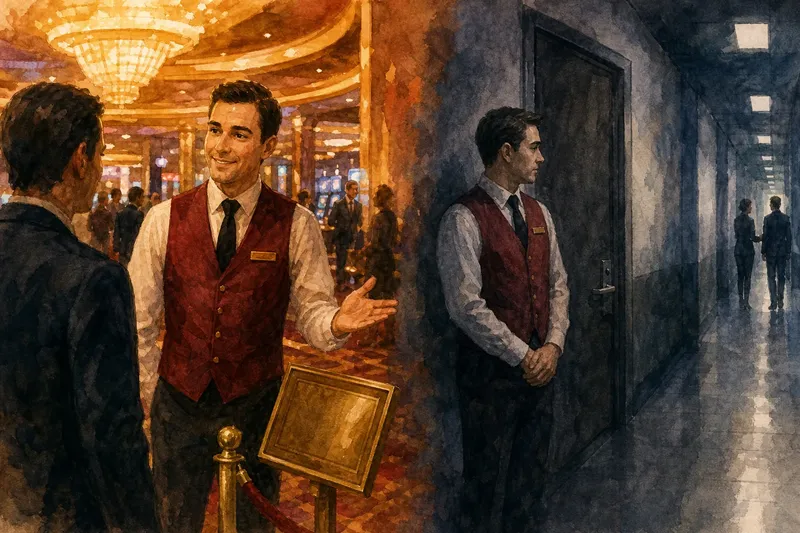
Not by itself: it shows that the venue has a point of control, but the criteria may be posted elsewhere or explained by staff. Check the stated conditions for the area you plan to visit before proceeding.
How can I describe a crowded entrance precisely?
State where people gather, which route they use and whether the doorway remains clear. Avoid guessing why people have stopped or how the venue responds unless you have direct, relevant information.
A hypothetical arrival shows how layout guides movement
Imagine Amira arriving for the first time with a companion. Her starting point is the pavement outside a building with two visible doors: one marked “Hotel” and one set back beneath a canopy with a casino sign. Inside the casino entrance, a directory lists reception, lifts and dining; reception cannot be seen from the doorway.
Amira and her companion take the signposted casino route, then stop beside the directory without blocking the entrance. They use its listed destinations to choose the lift, but notice that it gives no information about conditions for a particular lounge. Before heading there, Amira asks the reception team about access to that area.
The resulting choice depends on the answer: if staff explain the conditions clearly and they meet them, the pair can decide whether to continue; if the answer is uncertain, they can stay in the public lobby and seek clarification. The route and directory helped them move through the entrance, while a direct conversation addressed the question the signs left open.
Casino entrance design is easiest to understand when you follow the order of arrival: approach, doorway, first sightline, pause and onward route. That sequence shows where the building gives direction and where a visitor still needs to ask.